
The AMR Narrative

Central Line-associated Bloodstream Infection (CLABSI)

Although great care has been taken in the compilation and preparation of all directory entries to ensure accuracy, we cannot accept responsibility for any errors or omissions. Any medical information is provided for education/information purposes only and is not designed to replace medical advice by a qualified medical professional. Please see our disclaimer at the bottom of this entry.

What is a Central Line-associated Bloodstream Infection (CLABSI)?

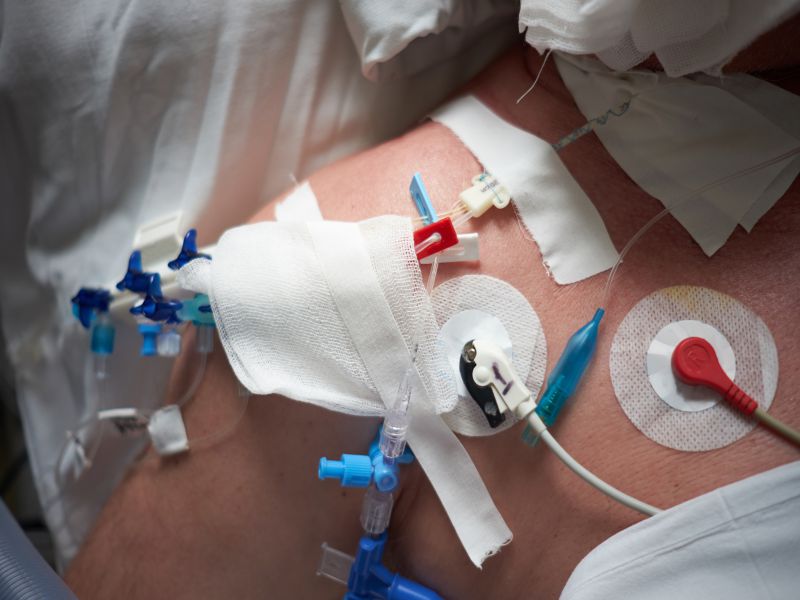
A central line-associated bloodstream infection (CLABSI) is a serious infection that occurs when microorganisms enter the bloodstream through a central line (also known as a central venous catheter). CLABSIs are healthcare-associated infections. CLABSIs may be difficult to treat because of the growing resistance of germs to the available antimicrobials. Therefore, CLABSIs are associated with increased mortality, healthcare costs, and length of hospital stay.


What is a central line?

A central line is a tube (catheter) that physicians often place in a major vein in the neck, chest, or groin to give medication, to provide fluids, or to help conduct medical tests. A central line accesses a large vein that is close to the heart, so it is different from standard intravenous lines which are used to give medicine into a vein near the skin’s surface.

Moreover, a central line may remain in place for weeks or months and may be used to give therapies several times a day. Indeed, central venous catheters are important to treat a lot of diseases in hospitals (especially in intensive care units), in long-term care facilities, in dialysis centres, and even at home after a hospital stay or due to a long-term treatment for cancer.


How do patients get a CLABSI?

Germs, such as bacteria or fungi, may cause a CLABSI by travelling down a central venous catheter, and entering the bloodstream.


What are the symptoms of a CLABSI?

Some of the common symptoms and signs of a CLABSI are fever and chills, red skin and soreness around the central line.


How is a CLABSI diagnosed?

To correctly diagnose a CLABSI, first your physician will perform a physical examination and ask you about symptoms. Guided by these elements, your doctor will be able to choose the most appropriate diagnostic tests.

The laboratory test used to identify a CLABSI is represented by a blood culture. A sample of blood is sent to a laboratory to grow the microorganism over time using a media on a petri dish (culture) and identify it. Then susceptibility tests can be carried out to determine which antimicrobials are most effective against it, to start the most appropriate antimicrobial therapy. Understanding which antimicrobials will work best is especially key to CLABSIs as resistance among pathogens is a constantly growing problem.


How is a CLABSI treated?

Guided by the physical examination and the results of diagnostic tests, physicians will determine the best treatment for each patient. Antimicrobials, such as antibiotics or antifungals, may be used to treat a CLABSI.

Antimicrobial medicines may vary according to the type of the infection, the microorganism responsible for the disease, and results of susceptibility tests. CLABSIs are severe infections which require treatment in hospital with intravenous antimicrobials (i.e. medications are given through a drip or a tube), and additional therapies. Finally, the central venous catheter might be removed.

Unfortunately, due to increasing resistance to the available antimicrobials, CLABSIs are becoming more and more difficult to treat, and sometimes a combination therapy is needed, which means that two or even more antimicrobials are necessary.


What can patients and caregivers do to help prevent a CLABSI?

Sometimes patients are sent home from the hospital with a central line to continue their treatment. Patients and their caregivers can take the following precautions to help to prevent a CLABSI:

• Understand how to care for the central venous catheter before leaving the hospital.
• Always clean your hands (by washing them with soap and water or using an alcohol-based hand rub) before and after handling your catheter. Remember: hand hygiene is your best protection against infections.
• Avoid touching the catheter or tubing as much as possible.
• Ask people who visit you to clean their hands, and not to touch the catheter or tubing.
• Pay attention to the bandage and the area around it.
• If you suspect to have symptoms or signs of infection, call your doctor immediately.


Disclaimer: The information provided on this website is intended for educational purposes only. It is not intended to be a substitute for professional medical advice, diagnosis, or treatment. Always seek the advice of your physician or other qualified health provider with any questions you may have regarding a medical condition. Never disregard professional medical advice or delay in seeking it because of something you have read on this website. Reliance on any information provided on this website is solely at your own risk. The website owners and authors are not responsible for any errors or omissions in the content or for any actions taken based on the information provided. It is recommended that you consult a qualified healthcare professional for individualised medical and health-related guidance.


Cameron Prior

Cameron Prior

BVSc MSc PgCert CertAVP DipECVIM-CA MRCVS

RCVS Recognised Specialist in Small Animal Medicine

Cameron is a European Diplomate in Small Animal Internal Medicine. Passionate about fungal disease, antimicrobial stewardship, endocrinopathy, and facilitating multiple studies to enhance the evidence base of veterinary medicine. Keen to build collaborative projects with colleagues across Europe and to promote clinical research in practice.

Abi Mc Alester

Abi Mc Alester

I am a graduate from the National University of Galway with an Honours BSc in Pharmacology, and a recent graduate from Maynooth University with a MSc in Immunology & Global Health. Throughout university, I was an active member of the Global Health Network, which was a student-led group focusing on health, equity, and international development. Here is where I became interested in the global impact of AMR and the multiple factors that influence its spread. I chose to focus my studies on the mechanisms behind resistance and vaccination design; however, I understand that in order to have a global impact, there needs to be global awareness.

The AMR Narrative provides lived experiences and stories from those affected by resistance, something I believe is so important and why I wanted to help share these stories on social media. Translating scientific knowledge into digestible and understandable language is critical for fighting resistance.

Nduta Kamere

Nduta is a global health pharmacist and AMR consultant recognised for her leadership in antimicrobial stewardship, One Health, and healthcare equity. She has shaped AMR strategies and advanced healthcare accessibility across Africa, with a significant portfolio that includes contributions to the Commonwealth Partnerships for Antimicrobial Stewardship (CwPAMS) programmes. As Technical Lead, she oversaw the co-development of the Quadripartite Antimicrobial Resistance Toolkit for Youth Engagement, now used globally to drive advocacy and behaviour change.

Her expertise spans supply chains, pricing, and substandard and falsified medicines, and her research is published in the WHO Bulletin and peer-reviewed journals, informing regional and global AMR policy and practice.

Dr Marie-Anne Bouldouyre

Dr Marie-Anne Bouldouyre is an infectious diseases physician and hospital practitioner in Paris. Twelve years of clinical work in a suburban hospital shaped her understanding of access to care, patient relationships, and the daily reality of antimicrobial resistance.

Since 2022, she has led the Regional Antibiotic Stewardship Centre in Île-de-France and coordinates the national network, working with a multidisciplinary team to promote responsible antibiotic use and strengthen collaboration among healthcare professionals. She also continues to manage complex infections at Saint-Louis Hospital.

Convinced that antimicrobial resistance cannot be tackled by healthcare workers alone, she advocates for the active involvement of patients : understanding, questioning, and taking part in decisions about antibiotics. Their stories are essential to making this issue visible and concrete.

She is proud to collaborate with initiatives such as The AMR Narrative and hopes to foster similar projects in France to give patients a voice in this shared fight.

Dr Erva Cinar

Dr Erva Cinar is a London based paediatric resident doctor and clinical researcher with interest in infectious diseases.

She is currently completing a Master’s in Public Health at the London School of Hygiene & Tropical Medicine. Through the World Medical Association’s Junior Doctor’s Network (WMA-JDN) AMR Working Group, she engages in policy and advocacy on antimicrobial resistance and stewardship at global level.

Alongside her clinical and academic roles, she works with the Royal College of Paediatrics and Child Health (RCPCH) and the International Child Health Group (ICHG); leads on organising teaching resources and educational events to improve research skills for UK paediatric trainees and for global child health professionals.

Hamu Madzedze

Hamu Madzedze is a seasoned Zimbabwean journalist with over 15 years’ experience.

She previously worked for the Zimbabwe Broadcasting Corporation as a reporter and sub-editor, before establishing an independent website, 365HealthDiaries, which focuses on health and gender issues.

She holds a BA in Media Studies and a BA (Special Honours) in Communication and Media from the Zimbabwe Open University, as well as a diploma from the Christian College of Southern Africa.

Her work has been recognised with several awards, including the Global AMR Special Mention Award (2024), the Sexual Health Rights and Equity Fellowship Special Mention Award (2025), and the Merck Foundation Award (2024) for outstanding coverage of health issues, gender, infertility, and genital mutilation, where she achieved third position in the Online Category.

Hamu is passionate about addressing AMR through the media.

Jomana F. Musmar

Dr. Jomana Musmar is a distinguished global policy expert and proactive leader with over fifteen years of government experience in strategic planning, operational design, and policy execution. Renowned for simplifying complex topics with expertise and diplomacy, she has spearheaded innovative solutions to global health challenges, shaped impactful policies, and advanced national and international missions.

As the Executive Director of the Presidential Advisory Council on Combating Antibiotic-Resistant Bacteria, she established and led the council’s operations, liaising with over 600 experts, worldwide, across government, industry, and academia. Her efforts culminated in the development of critical recommendations addressing antimicrobial resistance and interrelated One Health issues, influencing both domestic and global health strategies.

In her tenure as Deputy Director of Strategic Initiatives for the Office of Infectious Diseases and HIV/AIDS Policy, at the US Department of Health and Human Services, Dr. Musmar oversaw the formulation and implementation of national health strategies for vaccines and a range of infectious diseases including HIV/AIDS and viral hepatitis. Her leadership and technical expertise facilitated groundbreaking policies during national emergencies, including responses to the COVID-19 pandemic, and initiatives to combat congenital syphilis and childhood vaccination disruptions. Dr. Musmar holds a Ph.D. in Biodefense from George Mason University, a Master’s degree in Biomedical Science policy and Advocacy from Georgetown University, and is a Lean Six Sigma Black Belt. Fluent in English and Arabic, she is a sought-after speaker and advisor, having represented the United States at premier global health conferences.

Her published works on antimicrobial resistance, pandemic preparedness, and national health security underscore her reputation as a thought leader and innovator in public health and biodefense.

Chris Shaffer

Chris Shaffer was a music, special education teacher, and high school principal for 45 years. At the end of his educational career, he was thrust into the world of AMR infections when a number of abdominal surgeries left him with an E-coli infection which failed to respond to antibiotics. After doctors in the USA left him with little hope for a cure, diminishing health, and a bleak prognosis, he set out on his own.

Chris found success in phage therapy at the Eliava Phage Therapy Center in Tbilisi, Georgia. With phage therapy giving Chris his life back, he has dedicated his retirement years to advocating for and helping raise awareness of phage therapy used for AMR infections. He tells the story of his phage journey in a book titled, Finding Phage: How I Partnered with a Friendly Virus to Cure My Deadly Bacterial Superinfection. His website, phagetherpyusa.com helps others learn to understand the healing power of phage therapy.

Demi Christofi

Demi is an Associate Scientific Director at a medical communications agency, with a background in microbiology and a longstanding focus on antimicrobial resistance. She holds an MSc in Microbiology, where she first became interested in the global challenge of resistance and the need to bring scientific understanding to wider audiences.

Demi’s career has centred on a simple but powerful belief: that how we communicate science matters. Her work focuses on making complex data clear, engaging, and accessible – whether for healthcare professionals, policy makers, or the patients most affected by infection and resistance. She has contributed to a wide range of AMR-focused projects, including educational programmes, congress communications and stewardship initiatives.

A central thread in Demi’s work is the importance of the patient voice. She is passionate about making sure real-world experiences of treatment failure, recurrent infections, and the anxiety surrounding resistance are not lost in the data. She believes that listening to patients and involving them meaningfully is essential for shaping more effective, human-centred responses to AMR.

Demi is also a strong advocate of the One Health approach, recognising AMR as a complex, interconnected issue that spans human health, animal health, and the environment. She is particularly drawn to efforts that move beyond siloed thinking and focus on practical, joined-up solutions.

In 2025, Demi joined The AMR Narrative as an Independent Advisor, where she supports the charity’s mission to centre communication, community, and inclusion in the global AMR response.

Outside of work, she is a Girlguiding unit leader and a qualified yoga teacher. These roles reflect her commitment to care, learning, and creating supportive spaces for others.

Andrea Hartley

Andrea has worked in health communications and campaigning for 3 decades. She is committed to fighting AMR through timely and appropriate communications globally,.

Andrea set up Skating Panda, the creative social and environmental impact consultancy, over a decade ago and drives its impact and growth. Focused on original and lasting public interest communications as well as issue strategy and advocacy, the Panda team has a track record of prompting tipping points in the status quo that drive better social and planetary outcomes.

Andrea’s combination of commercial marketing and development experience with deep issue knowledge have been sought by decision-makers at global summits, corporate and NGO board members, and have enabled her to set up multi-million fundraising platforms and push through policies that change and save lives. 

Andrea is Vice Chair of mothers2mothers, the world’s largest employer of women living with HIV, and a Board Director of Maymessy, a food poverty social enterprise.

A lifelong advocate for gender equality, she played a key role in establishing the UK’s Women’s Equality Party.

Esmita Charani

Professor Esmita Charani is a pharmacist and researcher investigating how we use antibiotics in different cultural and social contexts. She works with teams in the UK, India, and South Africa to develop research programmes investigating all aspects of antimicrobial resistance in human populations with a focus in hospital settings.

She has experience in communicating her research with patients and the public through various media including animations, blogs, and educational videos.